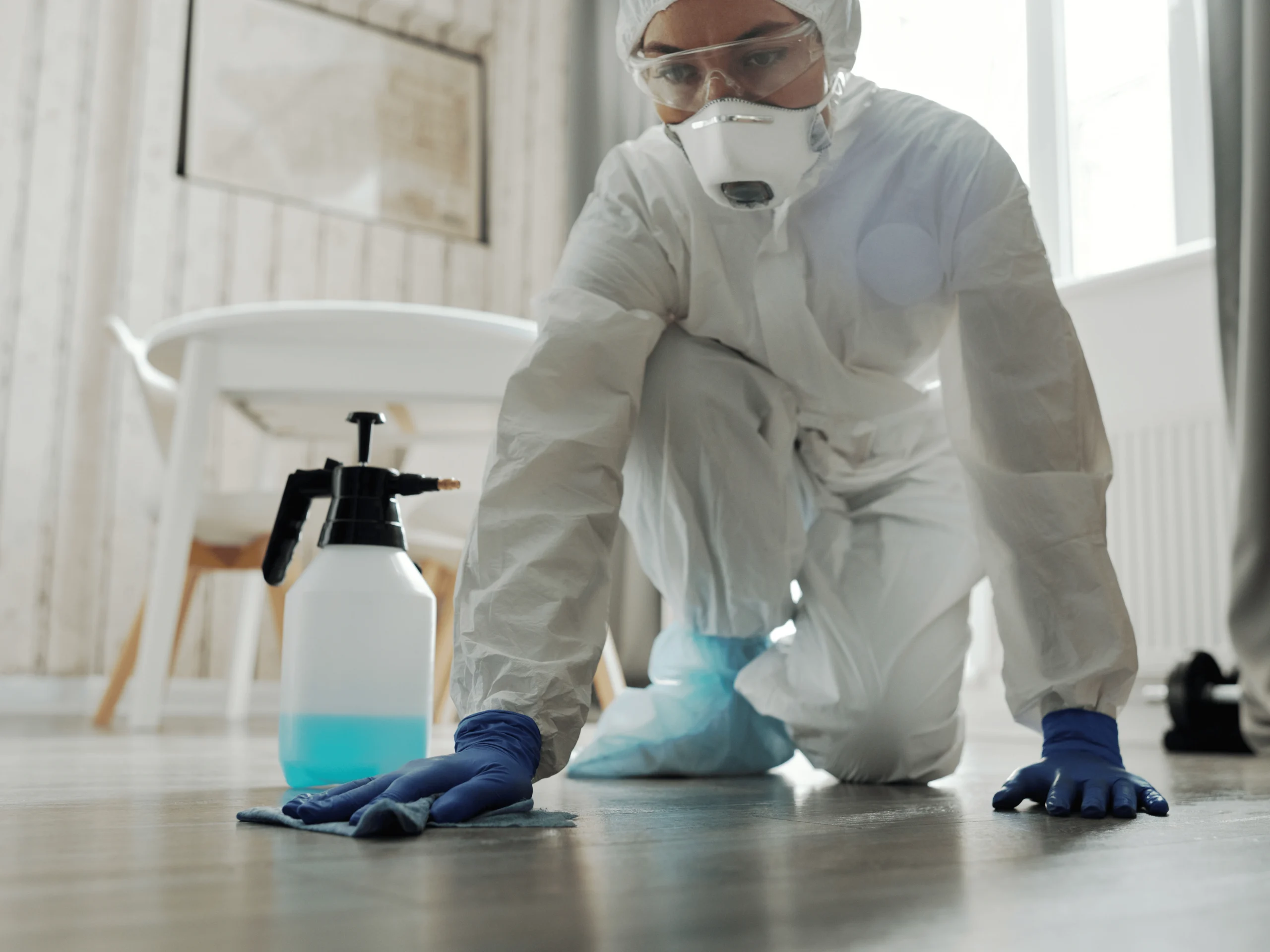

Hazardous & biohazard cleaning services deal with contamination that standard cleaning generally cannot handle. This includes remediating bodily fluids, human waste, sharps, drug paraphernalia, sewage contamination, trauma scenes, hoarding conditions, or spaces that need careful decontamination before people can use them again.
It is not about making the area seem more pleasant to look at. What matters more is that the contamination itself carries infection risks, creates unsafe working conditions, and leaves waste that needs to be handled in the right way. And of course, a surface can look clean and still be unsafe if the wrong products, equipment, and procedures have been used.
This guide explains what hazardous & biohazard cleaning services cover, when to call professionals, what usually happens during the clean, and why this work should not be left to untrained staff.
What Counts as Hazardous or Biohazard Cleaning?
Biohazard cleaning services are designed to reduce risk by removing contamination or contaminated materials safely, disinfecting the affected areas, and disposing of waste correctly. Though it is part of the process, what sets this service apart from a deep clean is that it prioritises making the area biologically safe before restoring it to what it once was.
Typical situations include:
- Blood or bodily fluid contamination
- Trauma, accident, or crime scene cleaning
- Human or animal waste
- Sewage backflow or toilet overflow contamination
- Sharps, needles, or drug-related waste
- Hoarding environments where waste has built up
- Infection-control cleaning after illness or suspected contamination
- Commercial or public spaces affected by hazardous waste
Although common, the service is not limited to residential properties. Offices, schools, warehouses, transport spaces, and communal buildings can all face incidents where standard cleaning is not enough. And if you are in charge of managing the space, the NHS England Healthcare Cleanliness Standards state that you must plan for the cleaning and disposal of waste contaminated by biohazards as part of your duty.
Why Standard Cleaning Is Not Enough
A normal clean is designed to remove visible dirt, dust, marks, and everyday grime. Hazardous & biohazard cleaning is an entirely different job, often needing a team to deal with potential exposure routes, hidden contamination, absorbent materials, safe disposal, and the need to minimise the risk of spreading the contamination during the process itself.
If biohazards are wiped with general-purpose products, the surface may look better while the risk remains. If contaminated cloths, mops, or PPE are moved through a building, the contaminated area can get larger. And if soft furnishings, flooring, and walls have absorbed the contaminants, a quick wipe will not deal with the problem at all.
Professionals doing a hazardous & biohazard cleaning service will look at the risk in its entirety instead of just the contaminated area’s visible marks.
That means asking:
- What is the contaminant?
- How far might it have spread?
- Which surfaces are porous, damaged, or difficult to disinfect?
- What PPE is needed?
- What products and dwell times are suitable?
- What waste must be removed, bagged, labelled, or disposed of through the right route?
- What needs documenting for internal records?
For untrained staff, that is a lot to judge in the middle of a stressful incident.
When Should You Call a Professional Cleaning Team?
Immediately. Not just for you, but also for your staff, customers, residents, and everyone else involved.
This is particularly important for cases such as trauma scenes, but you may also need expert advice for remediating less dramatic situations that still need proper control. This could mean a washroom incident in your workplace, a needle found in a communal area, a contaminated void property, or waste discovered in a public-facing space.
A useful rule to keep in mind is that if the person cleaning would need more than standard gloves and household cleaning products to do the work safely, it is best to get professionals involved.
Professional support is especially important for:
- Bodily fluid spills in workplaces, public areas, care settings, schools, or hospitality spaces
- Repeated contamination in communal buildings
- Waste that may include sharps or drug paraphernalia
- Contamination on carpets, upholstery, mattresses, or other absorbent materials
- Areas where vulnerable people may be exposed
- Sites where the business needs a controlled, documented clean before reopening
- Any incident where staff feel unsure, unsafe, or emotionally affected by the work
There is also a human side here. Staff should not be expected to clean traumatic or potentially infectious material just because they happen to be on shift. Even with good intentions, untrained cleaning can put them at risk and may leave the business with a bigger problem afterwards.
What Happens During a Biohazard Cleaning Job?
We understand that every hazardous & biohazard cleaning service job can vary from one client to the next, but we usually follow a clear sequence to ensure all bases are covered. The point of our process is to control the area first and clean it properly instead of rushing straight in.
Initial Risk Assessment
We first check what has happened, where the contamination is, which materials are affected, and whether the space needs to be isolated. This helps us decide the level of PPE, equipment, disinfectant, and waste handling required.
We can also offer a bit of flexibility for our commercial clients. We can consider whether part of the building can stay open, whether the clean needs to happen outside working hours, and how we would do the work if there are tenants, staff, guests, or other individuals nearby.
Containment and Safe Access
Based on our initial assessment, the affected area may be contained before the cleaning starts. This helps stop people from walking through the space and spreading the contamination to other places.
The procedure can be as simple as closing the room, but larger or more sensitive sites may need a more controlled setup. For workplaces, public buildings, and shared facilities, this step is often what helps prevent a manageable incident from becoming a building-wide issue.
Removal of Contaminated Waste
All contaminated waste, PPE, sharps, and other items need to be handled carefully. And this is not the same as putting general rubbish into a bin bag.
What we do is remove the risk without creating a new one. This includes containing the biohazards in bags, segregating them properly, and using the appropriate disposal routes as needed.
Cleaning, Disinfection, and Detail Work
Once the waste is contained and removed from the area, the team can proceed to clean and disinfect all affected surfaces.
Expertise is what matters most here. The right chemical needs the right contact time. The surface needs to be prepared so it is suitable for that method in the first place. Areas around where the contamination was found often need cleaning too, especially touchpoints, floor edges, skirtings, handles, washroom fixtures, and other nearby items and equipment.
A trained professional doing hazardous & biohazard cleaning looks for splash patterns, transfer marks, porous materials, damaged flooring, gaps, and hidden contamination points.
Final Checks and Handover
After doing the work, we will check the area before handing it back. For commercial properties, the handover process is not just us saying that we cleaned the area. We make it clear what was cleaned, what was removed, whether any materials need replacement, and whether there are follow-up recommendations.
For example, if the contamination has reached a carpet, mattress, soft furnishing, damaged vinyl, or exposed timber, the safest answer may be to remove the item itself instead of doing another clean.
Risks of Having Untrained Staff Involved
It is tempting to treat a spill or contamination using your own staff, but this approach is generally risky. Untrained staff are largely unaware of how to assess exposure risks, choose the right PPE, avoid cross-contamination, manage sharps, handle contaminated waste, or clean porous surfaces properly. There is also the risk of them using products incorrectly, whether the product itself is too weak, the contact time is too short, it is mixed with the wrong chemicals, or it is applied to a surface where it cannot work properly.
It also presents an emotional burden. Cleaning after a traumatic incident is not a job for an ordinary housekeeper.
Based on our experience as a specialist cleaning company, it is much safer to remove the pressure from your internal teams. If a situation that demands hazardous & biohazard cleaning services arises, it is best to secure the area, keep people away from the risk, and bring in professionals who are trained to remediate the problem. The process is safer and far less likely to leave hidden problems behind.
How Biohazard Cleaning Supports Compliance and Duty of Care
As a business owner or site manager, there is no need for you to become a specialist at controlling contamination. What you need is a sensible plan to respond to these incidents should the need arise.
A good plan covers:
- Who isolates the affected area
- Who decides whether external help is needed
- How staff report contamination
- Where PPE and spill controls are stored, if appropriate
- Which spaces are higher risk
- How waste is handled
- How cleaning work is recorded
- When the area can be reopened
This is where knowing who to call for a specialist cleaning service becomes part of risk management. Hazardous & biohazard cleaning services can sit alongside regular commercial and industrial deep cleans, as well as one-off specialist support, especially for businesses with public footfall, communal areas, or sites adjacent to healthcare facilities and warehouses.
For Principal Cleaning Solutions, our priority is simple: we clear the contaminants, make the affected area safer, and help our clients understand what needs to happen next.
Where These Services Are Commonly Needed
Situations that demand hazardous & biohazard cleaning services can happen almost anywhere. The setting may change the process, but the core priority remains the same: remove the contamination without spreading it.
Common sites include:
- Offices and commercial buildings
- Warehouses and industrial units
- Schools, colleges, and nurseries
- Care homes and healthcare facilities
- Retail units and hospitality venues
- Public toilets and communal washrooms
- Void properties and end-of-tenancy properties
- Car parks, stairwells, bin stores, and shared residential spaces
- Transport hubs and public-facing buildings
Some situations are treated with more urgency because the site cannot reopen safely until the hazardous & biohazard cleaning work is done. Others can be planned to a certain degree, such as the decontamination of a void property or a deep clean for a healthcare facility. Either way, the service will be built around the risk, the area, and the people who use it.
Principal Cleaning Solutions provides commercial, industrial, hazardous & biohazard, and specialist cleaning services for clients who need a high standard of hygiene and safety. We work across a range of environments, from large-scale industrial sites to smaller residential properties.
What to Ask Before Booking Biohazard Cleaning Services
The cheapest and fastest option is not always the safest one when choosing a cleaning company. It is always good to ask questions to ensure that you will be working with a team that understands the risks of the work and what it entails.
Useful questions include:
- Have you handled this type of contamination before?
- What information do you need before attending?
- What PPE and products are likely to be used?
- How will you stop contamination spreading?
- Can you remove contaminated waste safely?
- What happens if soft furnishings or flooring are affected?
- Can you work around our opening hours or site restrictions?
- Will you explain what has been cleaned and what still needs attention?
A professional provider should not make vague promises before making their initial assessment. They should at least ask about the contaminant, the size of the affected area, surface types, access, people on site, urgency, and any immediate safety concerns.
That conversation often tells you a lot.
FAQ
What is the difference between deep cleaning and biohazard cleaning?
Deep cleaning targets built-up dirt, grime, dust, and hygiene issues. Biohazard cleaning deals with potentially dangerous biohazards, so it needs a more solid plan to mitigate risks, suitable PPE, careful disinfection methods, and correct waste handling.
Can staff clean up blood or bodily fluids themselves?
Small, low-risk incidents can be handled by internal staff if they are trained and properly equipped. Isolate the area and call a specialist if the staff are untrained, or if the contamination is much larger, more dangerous, and involves sharps or other contaminated materials.
How quickly should a biohazard clean be arranged?
Immediately or as soon as the area can be made safe. The longer you leave the contamination alone, the more it becomes a risk to you, your staff, the building, and other people who should not be near it.
Do biohazard cleaners remove contaminated waste?
Yes. They should also be able to advise on what to do with the contaminated waste and arrange for its safe disposal where required. The process will depend on the type of waste, the site, and the disposal route needed.
Is biohazard cleaning only for crime scenes?
No. Crime scenes are one good example of situations that demand hazardous & biohazard cleaning services, but the work also covers bodily fluids, sewage backups, sharps, human waste, hoarding-related contamination, and the disinfection of commercial or public spaces that cannot be handled safely by standard cleaning teams.
Need Help With Hazardous or Biohazard Cleaning?
Principal Cleaning Solutions provides hazardous & biohazard cleaning services for both private and commercial clients across Hertfordshire, Bedfordshire, Cambridgeshire, and North London, regardless of the size of the job. We will assess the situation and help you get the space back under control.
If you need advice or want to book a one-off specialist clean, feel free to let us know how we can help you today. You can also give us a call on 01462 227 000 or email us at info@principalcleaningsolutions.co.uk.